
Finding by finding, scan after scan.
A research model that aims to outline FDG-avid findings on whole-body PET/CT, follow them across a patient's scans, and show why each one was flagged.
One scan. Many findings.
A whole-body FDG PET/CT can hold many findings, from head to thigh. Reading it means finding each one, telling it apart from normal uptake in the brain, heart, kidneys, bladder or muscle, measuring it, and at follow-up matching it to the scan before.
It is careful, repetitive work. Small and faint findings are the easiest to miss, and the hardest to follow over time.
Head to thigh, in one pass.
One pass over the whole-body scan. The research model aims to outline and measure FDG-avid findings. Small, faint findings are still its hardest case, and the focus of our current research.
The same lesion, found again.
On research data, Fosvel aims to match each finding to the previous scan and to show which ones look smaller, larger, stable, no longer seen — or new.
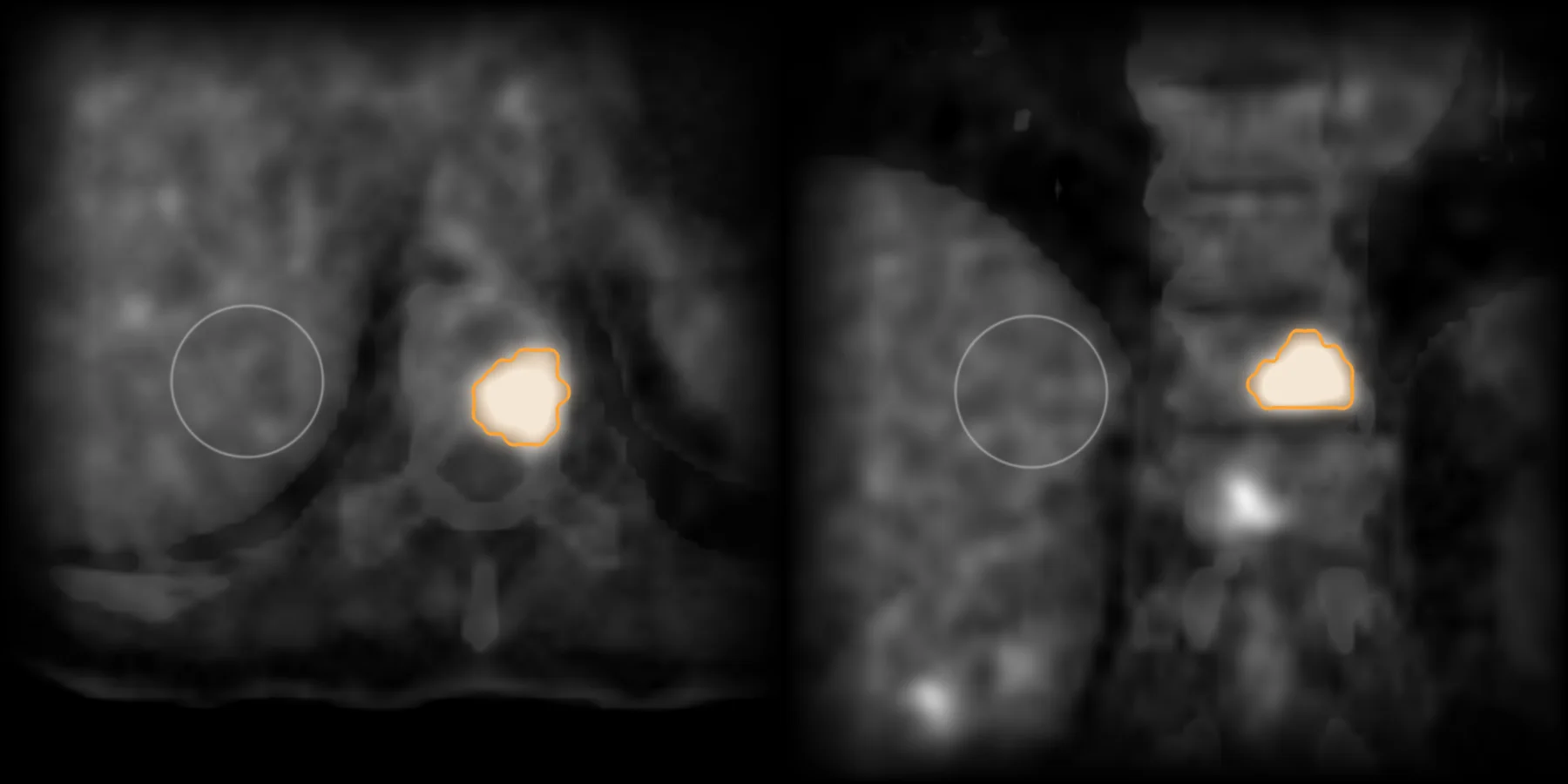
Why it was flagged.
For each research finding: where it is, how its uptake compares with the liver reference and the tissue around it, and the model's score for it — so a reader can check it.
What we measured, and on what.
Trained on 902 public PET/CT scans (800 patients); tested on 53 internal and 376 external scans from 4 independent public datasets.
Internal: same dataset as training, other patients (slightly optimistic). External: other public datasets. Dice: overlap with expert outlines, 0 to 1. Agreement with expert outlines, not clinical outcomes. SUV: computed from public data; calibration not independently confirmed. Very small lesions (under 0.5 mL) remain hard for the model. Research use only. Not a medical device. Results on public, retrospective datasets; not validated for clinical use.
A research assistant that keeps count.
Our goal is a research assistant that keeps track of every finding across all of a patient's scans, prepares the measurements a report needs, and points to what changed.
The aim: more of the physician's time for decisions, less for counting. These are goals of our research, not features of a product.